bing pixel

鶹ԭ

Star Tribune Editorial Board recognizes Augsburg College’s equity and inclusion work

Minneapolis Star Tribune - logoPresident Paul Pribbenow met with leaders of the Minneapolis Star Tribune editorial board to discuss Minnesota’s educational achievement gap among children and youth of diverse backgrounds. The state has one of the largest achievement gaps in the nation, and Augsburg is working to ensure all students of academic ability have access to higher education. The College’s pledge to this work includes limited debt pathways to graduation, setting aside dedicated housing for homeless students, increasing financial aid literacy, supporting faculty in creating inclusive classrooms, and increasing access to course materials.

The College was applauded for this leadership through a compelling editorial, “” written and published by the Star Tribune editorial board on Aug. 30.

The editorial explained that Minnesota is rapidly diversifying, butincreasing student diversity on college campuses involves more than waiting for more nonwhite Minnesotans to enroll. “As Augsburg College is demonstrating, academic institutions can do much to adapt their own policies and practices to educate what previously has been an underserved share of the state’s population,” the editorial explained.

Augsburg has sought to reduce barriers to college success that often impede students of color, and the College aims to not only to enroll a larger share of nonwhite students, but also to see them through to graduation.
WCCO story showcases Augsburg College’s diverse incoming class

A recent report airing on WCCO radionoted that as students ofall ages returned to school this fall, “Augsburg welcomed the class of 2020, with staff greeting students as they walked into the chapel for convocation.However, the class of 2020 had a special distinction – they are the most diverse class the college has seen, with more than 45 percent of them being students of color.”

As Augsburg College President Paul Pribbenowexplained, “For Augsburg, that means that our commitment to diversity, to inclusion and [our] commitment to justice is actually being lived out by the students who come here to be part of our community,”

Read and listen:on the WCCO website.


Lars Christiansen discusses Friendly Streets Initiative

Lars ChristiansenAssociate ProfessorLars Christiansen teaches courses in Augsburg’s Department of Sociology and Urban Studies Program. Christiansen puts his scholarship into practice as director of the Friendly Streets Initiative, a St. Paul-based organization thatfacilitates community organizing throughcreative public engagement events. Thegroup aims to help communities envision positive change to public spaces, collect and analyze data, and assistneighbors in navigatingcity planning processes.

Christiansen described the successes of the Friendly Streets Initiative to author Jay Walljasper for a chapter of the new book, “America’s Walking Renaissance: How cities, suburbs, and towns are getting back on their feet.” Walljasper serves as a senior fellow in Augsburg’s Sabo Center for Democracy and Citizenship, and his writing explores how new ideas in urban planning, tourism, community development, sustainability, politics and culture can improve citizens’ lives.

An excerpt from “America’s Walking Renaissance” was published by MinnPost and included a photo of Darius Gray ’15, a community organizer with FSI.

Read, “” on the MinnPost site.


Bill Green lends historical perspective to Black Lives Matter media coverage

Summer 2016 Pinterest6

What does it mean to matter?  What does it look like to matter?

With the Black Lives Matter movement, questions of racial equity have ignited important—and difficult—conversations in communities and courtrooms, on political campaign trails, and atcollege campuses.

Augsburg College Professor studies and writes about Minnesota history and law. He teaches U.S. Civil Rights subject matter, and he recently has been called upon to share his expertise on these topicsto assist media outlets covering Black Lives Matter news in the Twin Cities.

Greenwas quoted in a Minnesota Public Radio article that examined the roles non-black activists play in furthering theBlack Lives Matter movement’s agenda.

In the article, “,” Green usedthe history of the Civil Rights movement to analyze current demonstrations and protests. He also discussed the ways “protest fatigue” could impact the movement’s progression.

On August 5, Green also appeared onTwin Cities Public Television’s “Almanac” program where he provided a comparison between contemporary protests ordemonstrations andthose occurring decades — perhapseven centuries — earlier. Green explained that the tactic of making a public display can be useful when a group is seeking to meet a particular goal.

“The trick with the demonstrations, of course, is somehow helping society turn the corner so that … a community doesn’t feel the need to resort to desperate measures,” he said.

Theinterview with cohosts Cathy Wurzer and Eric Eskola is available on the and begins at the 31:55 minute mark.

Green’s comprehensive knowledge of Minnesota history has been cultivated over decades, and his latestbook, “Degrees of Freedom: The Origins of Civil Rights in Minnesota, 1865-1912”chronicles conditions for African-Americans in Minnesota in the half-century following the Civil War. The publication picks up where hisprevious book, “A Peculiar Imbalance: The Fall and Rise of Racial Equality in Minnesota, 1837-1869,”left off. Green spoke with MinnPost about the publication, describing his interest in statehistory.

“The history [of Minnesota] is amazing, particularly when you look at who was here before statehood and how they interacted with each other,” hesaid. “I found that we were lacking a good accounting of the black people who were part of that history. Most of them didn’t leave a written record, which looks like they had nothing to say, but of course they did. They were part of this experience.”

The Minnesota Book Awards honored Green and “Degrees of Freedom” with the 2016 Hognander Minnesota History Award.

Michael Lansing writes for MinnPost

Michael Lansing, associate professor and History Department chair, recently penned an article comparingthe United States’contemporary political landscapewith periods in the late 1960s and late 1970s.
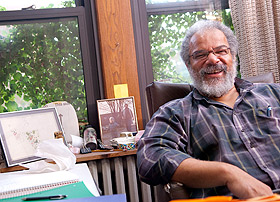
Lansing is a historian of the modern United States, and his research focuses on political history, environmental history, and other topics. In his Community Voices commentary, Lansing argued that the state of American democracy and milestones occurring in 1979 aresimilar to current events.

Read, “” on the MinnPost site.


Andy Aoki discusses influence of vice presidential picks

Andy Aoki

WCCO TV recently sought counsel from Andy Aoki, professor and department chair of political science at Augsburg College, to answer a question about how much a presidential candidate’s vice president selectioninfluences voters.

“How Much Does The Vice President PickMatter?” was the focus of therecent Good Question segment.

Aoki provided a straightforward answer.

“It doesn’t usually matter a lot,” he said. “The vice presidents tend to get a lot less attention, so it’s not that easy for people to make their pick based on them because you don’t know much about them.

on theWCCO site.

Bill Green lends historical perspective to MPR News article

bill_green
Bill Green

Augsburg College Professor studies and writes about Minnesota history and law. He recently was quoted in a Minnesota Public Radio article that examined the roles non-black activists play in furthering theBlack Lives Matter movement’s agenda.

In the article, Green called on the history of the U.S. Civil Rights movement to analyze current demonstrations and protests. He also discussed the ways “protest fatigue” could impact the movement’s progression.

Read, “” on the MPR News site.

Stadium expert Kristin Anderson speaks with
Star Tribune

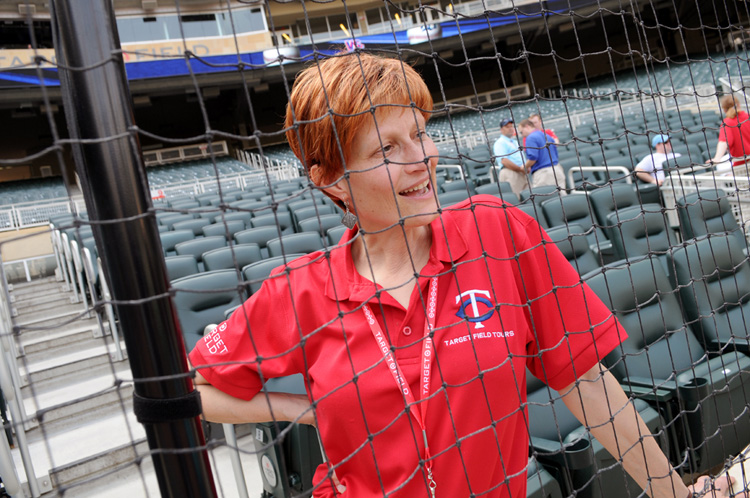
Kristin Anderson gives tours and presentations at Target Field focusing on architecture, sustainability issues, and art at the ballpark.

At Augsburg College, teaches courses on the history of art and architecture, and she’s prepared to talk about works ranging from the Mona Lisa to the Metrodome.

Anderson’s current writing and research are focused on sports architecture, and she is co-authoring a book on the history of athletic facilities in the Twin Cities.

Minneapolis’ new U.S. Bank Stadium is scheduled to open its doors to the public following a ribbon-cutting ceremony on July 22, and Anderson offered an explanation in theStar Tribune as to why the facility’s design needed to be bold.

“Every sports broadcast will open with a view of the stadium, the skyline shot, the establishing view of the city,” she said. “If it weren’t distinctive or if it were ugly like the Metrodome, that’s not the statement you want to make.”

Read, “” onthe Star Tribune website.

Andy Aoki discusses international politics with WCCO-TV

AokiAndy Aoki, professor and department chair of political science at Augsburg College, recently spoke with WCCO-TV about the implications of Britain’s decision to leave the European Union, a move now referred to as “Brexit.”
Aoki noted that visitors to the United Kingdom may benefit from the devaluation of the pound, but Britain’s unexpectedpolitical move also had far-reaching negative effects on financial markets around the globe.

“If you’re going this summer, you’ve kind of hit the lottery because the pound doesn’t look to recover much in the near future,” Aoki told reporter Rachel Slavik.

Economic and immigration issues were in the spotlight as the British debated whether or not to pull out of the European Union, and Aoki also provided Slavik with background on how these issues are influencing the 2016 presidential campaign in the United States.

Watch, “” on the WCCO website.

Kristin Anderson discusses new football stadium, history of athletic facilities in Minneapolis-St. Paul

Kristin Anderson — asports architecture expert, Augsburg College archivist, and art history professor — recently spoke with Minnesota Public Radio host Cathy Wurzer about the Twin Cities’athletic stadium history.

The Vikings football franchises’ new U.S. Bank Stadium will celebrate its grand opening in approximately onemonth, and Anderson provided context onhow the facility continues some local legacies while innovating in other regards.

Listen to, “” on the MPRwebsite to learn more.