
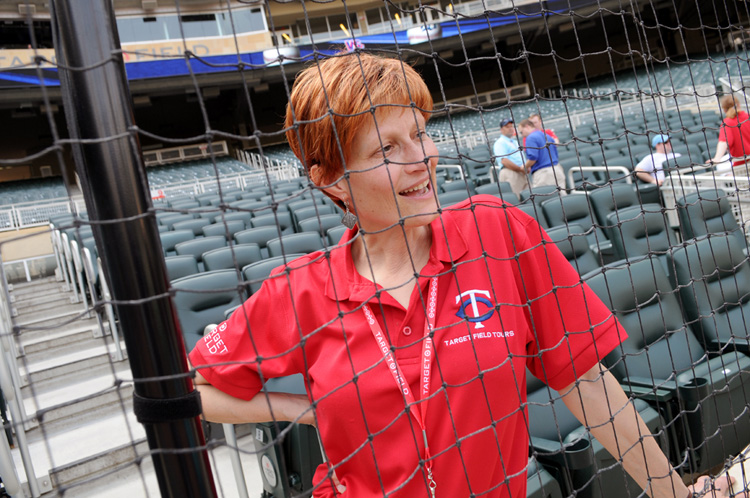
At Augsburg College, teaches courses on the history of art and architecture, and she’s prepared to talk about works ranging from the Mona Lisa to the Metrodome.
Anderson’s current writing and research are focused on sports architecture, and she is co-authoring a book on the history of athletic facilities in the Twin Cities.
Minneapolis’ new U.S. Bank Stadium is scheduled to open its doors to the public following a ribbon-cutting ceremony on July 22, and Anderson offered an explanation in theĚýStar Tribune as to why the facility’s design needed to be bold.
“Every sports broadcast will open with a view of the stadium, the skyline shot, the establishing view of the city,” she said. “If it weren’t distinctive or if it were ugly like the Metrodome, that’s not the statement you want to make.”
Read, “” onĚýthe Star Tribune website.
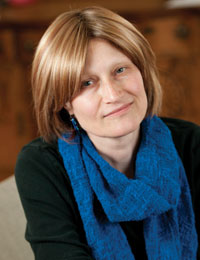 Kristin Anderson — aĚýsports architecture expert, Augsburg College archivist, and art history professor — recently spoke with Minnesota Public Radio host Cathy Wurzer about the Twin Cities’Ěýathletic stadium history.
 Kristin Anderson, Augsburg College archivist and professor of art history, was mentioned in a St. Paul Pioneer Press article aboutĚýan upcoming walking tour in the capital city’s historic Irvine Park neighborhood. Anderson willĚýshare history, stories, and insights during the walking tour. to learn more.