As of fall 2025, news and media updates have been integrated with the Augsburg Now alumni publication. This site archives news stories from before September 16, 2025. Please visit augsburg.edu/now or select "Augsburg Now" from the left navigation for current news.
WASHINGTON, D.C. — Augsburg College President Paul Pribbenow participated in a high-level meeting with the U.S. Department of Education in Washington, D.C., last week focused on highlighting successful strategies for increasing equity in college access and graduation rates for students eligible for the Federal Pell Grant Program.
One recent strategy deployed by Augsburg, in partnership with Minneapolis Community and Technical College and with Saint Paul College, is the . The thoughtfully and carefully constructed Auggie Plan, which is customized to the student profile of each partner institution, creates a clear, attainable, predictable, and efficient path from an associate’s degree to a liberal arts degree. The Auggie Plan is slated to be in five community and technical colleges by 2017.
“As a college located in one of the most diverse ZIP codes in the region and with a traditional undergraduate population comprised of 40 percent Pell-eligible students, Augsburg is deeply familiar with the work that a commitment to inclusion entails,” Pribbenow said. “We also know how rewarding it is when we get it right — which, admittedly, is not every time and not as often as we’d like. But the fact that there is still work to be done in no way deters our commitment.
“At Augsburg, we do this work because it is both right and necessary. It’s right and necessary for students — enriching our learning community with questions and ideas from a vast array of bright minds. It is right and necessary for businesses and nonprofits — marshaling the talents and perspectives of all our people to address our region’s most pressing needs and opportunities. It is right and necessary for Minnesota as a state that offers a lifestyle we cherish and wish to sustain. “
U.S. President Barack Obama, since the beginning of his administration, has worked to ensure more U.S. residents have the opportunity to earn a quality, affordable higher education.
“For us to thrive as a diverse democracy and for individuals to achieve their dreams of success, higher education must fulfill its promise of providing opportunity to all students, regardless of their race, gender, or income level,” said U.S. Under Secretary of Education Ted Mitchell.
“That opportunity means access, but getting into college is not enough. It’s getting in and getting through that matters. There are remarkable institutions around the country succeeding at making access and success a reality for low income students. We need to learn from their leadership and spread the word about practices that work.
Michael Lansing, associate professor of history at Augsburg College, was interviewed by Minnesota Public Radio for a segment that compared political movements from the early 1900s with the contemporary political landscape. Lansing is the author of “Insurgent Democracy: The Nonpartisan League in North American Politics,” which presents the history of The Nonpartisan League and describes its continued influence in the upper Midwest.
Lansing describes the League as a grassroots organization started by farmers who were discontent with large grain milling and transportation corporations in the region. He told MPR News host Tom Weber that The Nonpartisan League is the reason for the large number of co-operatives in North Dakota today, and the party was comprised of farmers who sought candidates that supported their platforms, regardless of party.
The Minnesota Spokesman-Recorder recently interviewed Jennifer Jacobs, assistant athletic director at Augsburg College, for an article on the challenges present as colleges seek to increase the diversity of their coaching and administrative staff.
In the article, Jacobs discusses some of the steps higher education administration can take to create a pipeline for people of diverse backgrounds to enter leadership roles. She notes that it is important for institutions to encourage women to seize new opportunities and to promote candid conversations on difficult topics like race.
“[Schools] need to find and foster the female student athletes that would want to get into coaching, administration — you name it, all the way up to the presidential level,” Jacobs said.
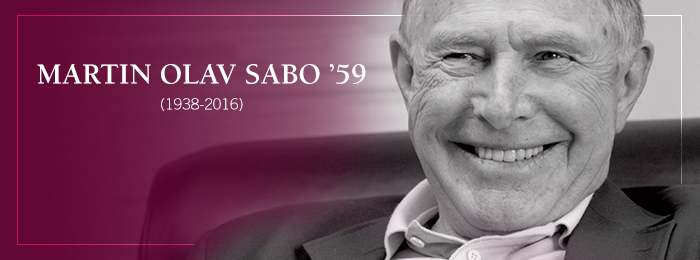
Upon his passing, Augsburg College alumnus and former U.S. Representative Martin Olav Sabo ’59 was remembered as one of the most effective members of Congress ever to come from Minnesota. An editorial published by the Minneapolis Star Tribune noted that Sabo was a “career politician” in the best possible sense and that he gave his all to strengthen democracy.
Augsburg College President Paul Pribbenow said that Sabo was, “a national leader and public servant, and an inspirational legend dedicated to revitalizing the role of higher education in equipping students for active engagement in citizenship and democracy.”
Following Sabo’s retirement from public service, Augsburg founded the Martin Olav Sabo Center for Democracy and Citizenship to carry on his legacy of important work. The Sabo Center is committed to fostering civic agency and engagement on campus and in the larger community.
Sabo’s career and accomplishments were recapped by national, state, and local media, including the following:
: Martin Sabo, Minnesota Congressman Known for Compassion in Era of Partisanship, Dies at 78
: Looking Back At Martin Sabo’s Impact
: Martin Olav Sabo, longtime Minnesota representative, has died
: Martin O. Sabo, Minnesota congressman for 28 years, dies at 78
KSTP-TV: Former DFL U.S. Rep. Martin Olav Sabo Dies
: Former U.S. Rep. Martin Olav Sabo dies
BringMeTheNews: Longtime DFL lawmaker Martin Olav Sabo dies at age 78
Star Tribune: Martin Sabo, longtime DFL congressman and politician, dies
: Longtime Minnesota Congressman Martin Sabo dies at 78
: Martin Olav Sabo, longtime congressman, dies at 78
Star Tribune: Martin Olav Sabo: He gave his all to strengthen democracy
The Column: Rep. Martin Sabo, a longtime supporter of LGBTQ equality, dies at 78
: Klobuchar, Dayton and others react to death of former U.S. Rep. Martin Sabo
: Political Leaders React To Martin Sabo’s Death
KARE-TV: Former congressman Martin Sabo dies at 78
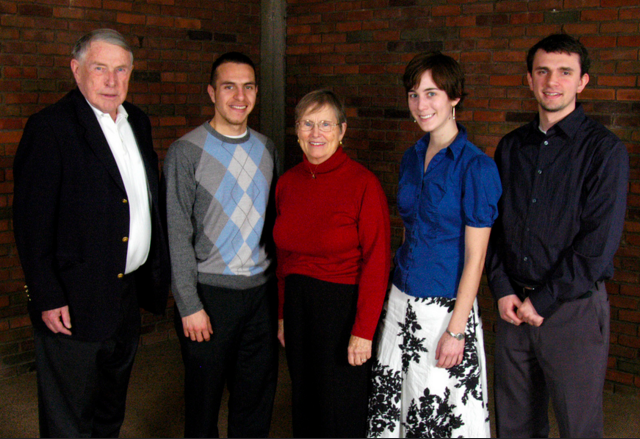
Congressman Martin Olav Sabo ’59, left, stands with Augsburg College students at a celebration of scholarship. Sylvia Sabo, center, and wife of the Congressman, also is shown. The Sabos guided and shaped the formation of Augsburg College’s Martin Olav Sabo Center for Democracy and Citizenship.
(MINNEAPOLIS) — U.S. Representative Martin Olav Sabo ‘59, who passed away at age 78 on March 13, 2016, was a lifelong public servant who exemplified the progressive approach and personal integrity that were modeled in his Lutheran upbringing and education.
His commitment to public service will leave a lasting legacy at Augsburg College through his work to create and guide the , the Sabo Scholars program, and the annual Sabo Symposium.
One year after graduating cum laudefrom Augsburg College, at age 22, Sabo was elected to serve in the Minnesota House of Representatives. During Sabo’s tenure in the Minnesota Legislature, he became the first member of the Democrat-Farmer-Labor party to serve as Speaker of the House, a post he held from 1973-78. He went on to serve for 28 years as a member of the U.S. House of Representatives, retiring in 2007.
At the same time that Sabo served in Congress, he volunteered 12 years to Augsburg College as a member of the Board of Regents. He was named an Augsburg Distinguished Alumnus and received the first honorary degree ever conferred by the College.
Sabo and his wife, Sylvia, guided Augsburg in the creation of the Martin Olav Sabo Center for Democracy and Citizenship. The goals of the Center are to create opportunities for civic experiences and skill-building—inside and outside the classroom—for students, faculty, staff, alumni, and community members—and to carry forward the Sabos’ and the College’s important commitment to public service.
“The creation of the Sabo Center for Democracy and Citizenship gives Augsburg the ongoing opportunity to celebrate the life and work of our dear friend and distinguished alumnus,” said President Paul C. Pribbenow.
“Congressman Sabo’s life-long commitment to public service is an inspiration to all of us. As we live out our mission and vision here at Augsburg, we, of course, are deeply engaged in helping our students to understand the electoral political process, which Congressman Sabo so ably served.”
Congressman Sabo and Sylvia Sabo are parents of Auggies Karin Mantor ‘86 and Julie Sabo ‘90.
Sabo was distinguished in all he undertook, and in 2006 was appointed Commander of the Royal Norwegian Order of Merit for outstanding work and dedication to Norwegian-American relations.
Learn about the Sabo Center for Democracy and Citizenship at .
The Star Tribune recently published an overview of the forthcoming Norman and Evangeline Hagfors Center for Science, Business, and Religion. Augsburg College will break ground on this new academic building featuring classrooms, offices, and laboratories in April.
The article said, “The inclusion of scientific and religious disciplines within the same building is meant to express ‘a firm belief in the intersections and fluidity of boundaries’ on Augsburg’s campus.”
Learn more about Augsburg’s campus improvements in on the Star Tribune site.
KSTP television recently reported on the Augsburg College men’s hockey team’s win in a tense, triple overtime match against St. John’s University on March 5 to clinch the Minnesota Intercollegiate Athletic Conference championship. The game was the third longest in NCAA Division III history, lasting 102:53.
Senior Mack Ohnsted ’16 scored the game-winning goal in the opening minutes of the match’s third overtime period; he was assisted by Eli May ’18. The Auggies twice rallied from two-goal deficits to bring the game into overtime.
Watch and read Augsburg Wins MIAC Hockey Championship Over St. John’s In 3OT Thriller on the KSTP site.
The Minnesota Women’s Press recently published an article on Interfaith Youth Connection, a program for high school and college-age youth that promotes interfaith understanding and service. The article includes comments from Fardosa Hassan ’12, Muslim student program associate at Augsburg College and program coordinator of IYC.
By holding regular conversations and yearly service events, the group seeks to give youth “a way to be proud of who they are in whatever faith background they believe in, while reducing prejudice and misconception,” Hassan said. “In the midst of what is going on today, this is something we need.
High school student and IYC participant Sarah Mason agrees.
“It will make a lasting impact in the way we see the world and each other and the way we handle conflict,” she said.
Twin Cities news and culture magazine City Pages recently selected “Reconfiguring Casta,” an exhibit featuring the work of Maria Cristina Tavera, director of the McNairs Scholars Program at Augsburg College, as a “must-see art show.” Tavera’s artwork is on display in the Christensen Center Art Gallery through March 31.
The article states that Tavera is “A powerhouse curator and advocate for Latina artists,” and that she “is a skilled artist in her own right, examining how the Latin American diaspora express their identity in today’s world.”
The Minneapolis Star Tribune recently reported on the growing number of Muslim college students and the ways that schools, including those with Christian affiliations, are adapting to the increasing religious diversity of their student bodies. One way that colleges are improving the experiences of their Muslim students is by hiring advisers like Fardosa Hassan ’12, Muslim student program associate at Augsburg College.
The article reports that since she accepted the position last summer, Hassan has organized weekly prayer meetings for Augsburg’s Muslim students, recruited the help of a therapist and imam to undercut the idea that seeking treatment for depression is un-Islamic, and has taken Religion 100 students to visit local mosques. “Islam has called me to serve my community,” Hassan said, and her work has not gone unnoticed.
When asked about Hassan, first-year student Mohamud Mohamed ’19 said that “Fardosa is our guide. She is our connection to the outside world.”
College pastor Sonja Hagander said that given the growing number of Muslim students, “it was really key to have a Muslim student adviser.”
The article notes that nationwide more than 50 colleges, including Ivy League schools such as Yale and Princeton, have hired advisers for their Muslim students.


 The Star Tribune recently published an overview of the forthcoming Norman and Evangeline Hagfors Center for Science, Business, and Religion. Augsburg College will break ground on this new academic building featuring classrooms, offices, and laboratories in April.