bing pixel

鶹ԭ

Study by Jay Wallasper Predicts Market Growth in the Cycling Industry

Jay Wallasper, Cycling Industry News

“The Surprising Promise of Bicycling Study in America” is a study conducted by Jay Wallasper, Senior Fellow at Project for Public Spaces and an Urban-Writer-in-Residence at Augsburg University. In the study, Wallasper and Melissa Blamer focus on advocacy, along with information useful to the cyclingindustry, such as the growth of bike share and infrastructure, the untapped demographic potential, and the deepening influence of grassroots advocacy.The study’s findings explain the impact that infrastructure for cycling has on the future growth potential, as well as the health benefits to bicycling, and the economic worth of cycling for transport.

See full story at the Cycling Industry News site.
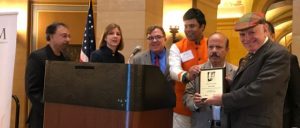
Joseph Underhill in Support of ICAN’s 2017 Nobel Peace Prize Recognition

Photo: Martial Trezzini, Keystone Via AP

Joseph Underhill, program director of the Nobel Peace Prize Forum talks with the Star Tribune’s John Rash about how ICAN’s award “fits very squarely within the mandate and framework of the Nobel Peace Prize as outlined in the will of Alfred Nobel, given its emphasis on disarmament, peace conferences and promotion of fraternity among nations.”

Geneva-based International Coalition to Abolish Nuclear Weapons (ICAN) was awarded the 2017 Nobel Peace Prizefor “its work to draw attention to the catastrophic humanitarian consequences of any use of nuclear weapons and for its groundbreaking efforts to achieve a treaty-based prohibition of such weapons.”

Weapons are “seen as an ongoing concern,” but that the Nobel committee was clearly “signaling concern about the current risks of nuclear conflict given the level of tension and the rhetoric around the Korean Peninsula and the leadership in both the U.S. and North Korea” adds Underhill, who is also an associate professor of political science at Augsburg University, where the Nobel Peace Prize Forum took place last month.

.

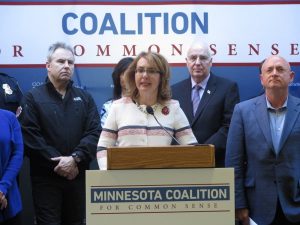
Nobel Peace Prize Forum welcomes Gabrielle Giffords, Mark Kelly, and gun violence debate

Former U.S. Congresswoman Gabrielle Giffords speaks at Augsburg.

Former Congresswoman Gabrielle Giffords and her husband, retired Naval Captain and NASA Astronaut Mark Kelly, spoke at the Nobel Peace Prize Forum on Augsburg’s campus in September. Following a failed attempt on Giffords’life in 2011, Giffords and Kelly formed the “Americans for Responsible Solutions”, an organization centered around reducing gun violence. Citing loopholes in current U.S. gun laws, the organizationsupports legislation for common sense gun laws and reform.

.

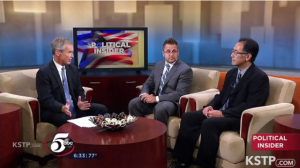
Professor Andy Aoki discusses international and local politics on KSTP’s Political Insider

Augsburg Professor and Political Science Chair Andrew Aoki discusses United Nations, North Korea, and the Minnesota state budget on “Political Insider.”

Augsburg University Professor and Political Science Chair ԻAokijoined KSTP’s Tom Hauser on the weekly news segment, Political Insider to discuss President Donald J. Trump’s September address to the United Nations. Aoki also discussed local political dynamics between the Minnesota State Legislature and Governor Mark Dayton in the interview.

Hex Houses for Hurricane Victims and Refugees

Hex House
Builders work in Murphy Square Park to complete the “Hex House” model. Photo: Kare 11

This fall’s Nobel Peace Prize Forum showcased the innovative “Hex House,” a pop-up emergency shelter created to help respondto refugee and natural disaster housing crises. As part of Augsburg University’s continued commitment to social justice and technology, this six-sided, 510 square-foot prototypewasconstructed and on display at MurphySquare throughout the2017 Nobel Peace PrizeForum. The tiny houses can be packed in a kit, shipped flat, andassembled withtools and instructions, much like an IKEA design.

See the storiesat


Augsburg Faculty Receives Research Fellowship

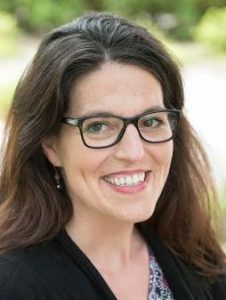
Alicia Quella, associate professor and program director of the Augsburg University Physician Assistant program.

Augsburg Associate Professor and Physician Assistant Program Director Alicia Quella has received an AAPA-PAEA Inaugural Research Fellowship. This new fellowship program is sponsored by the American Academy of Physician Assistants and the Physician Assistant Education Association. Each fellow’s institution will receive a grant of up to $25,000, which will allow recipients to focus on one of a number of research topics developed by the fellowship’s organizers. Quellaalso

KARE 11 discusses the legacy of discriminatory housing policies with the Mapping Prejudice Project

Kirsten Delegard and other Mapping Prejudice researchers talk with KARE 11 about their project.

In a conversation with KARE 11 Reporter Adrienne Broaddus,Kirsten Delegard, Augsburg University scholar-in-residence and director of the Mapping Prejudice project, discussed the lasting impact of historically discriminatory housing policies in Minneapolis.

“People think that because we didn’t have segregated water fountains or waiting rooms that we didn’t have segregation in Minneapolis,” she said, “but racial covenants determined who could live where … We are still living with the legacy of these policies. We can point to all kinds of disparities especially in area of home ownership that we are living with today because of these polices enforced over the last century.”

The Mapping Prejudice project, once complete, will be the first comprehensive map of racial covenants for a U.S. city. about the project.


Minnesota Daily features the Mapping Prejudice Project’s work to uncover Minneapolis’ discriminatory housing past

Researchers in the Mapping Prejudice project review a Minneapolis map. Photo: Minnesota Daily

Under the Mapping Prejudice Project, scholars from the University of Minnesota and Augsburg University have analyzed over 1.4 million historic Minneapolis housing deeds, finding racist language in more 20,000 documents. These racial covenants forbidding the sale of property to people of color are no longer legally enforceable, but researchers hope documenting this side of the city’s history will influence urban planning in years to come.

This article describes the methods that the Mapping Prejudice researchers use to conduct their workand discusses the motivations for the project with project director and Augsburg scholar-in-residenceKirsten Delegard.

The research group plans to map Minneapolis by the end of 2017 and all of Hennepin County next year.

Read the full story at the Minnesota Daily News site.

Star Tribune talks to President Pribbenow about Mapping Prejudice project in South Minneapolis

Screen shot of a time-progression map showing the growth of racially restrictive real estate covenants in the early 20th century.

Augsburg President Paul Pribbenow talks with the Star Tribune’s Randy Furst about how the Augsburg House — and much of South Minneapolis — were once governed by discriminatory housing policies. While the historical covenants are no longer legally binding, Augsburg is seeking a method to nullify the prohibition while still preserving the historical record, “so that we never lose sight of the actions that have segregated and repressed many,” Pribbenow said.

The findings about residential properties in South Minneapolis are part of the Mapping Prejudice project, led by a team of researchers from Augsburg and the University of Minnesota. For more information about the project, see . Go to the for information about other South Minneapolis homes, a perspective from a Minneapolis real estate lawyer, and an interactive map showing the growth of racially restrictive deeds across Minneapolis from 1910 to 1955.