bing pixel

Âé¶ąÔ­´´

What does community-based learning look like?

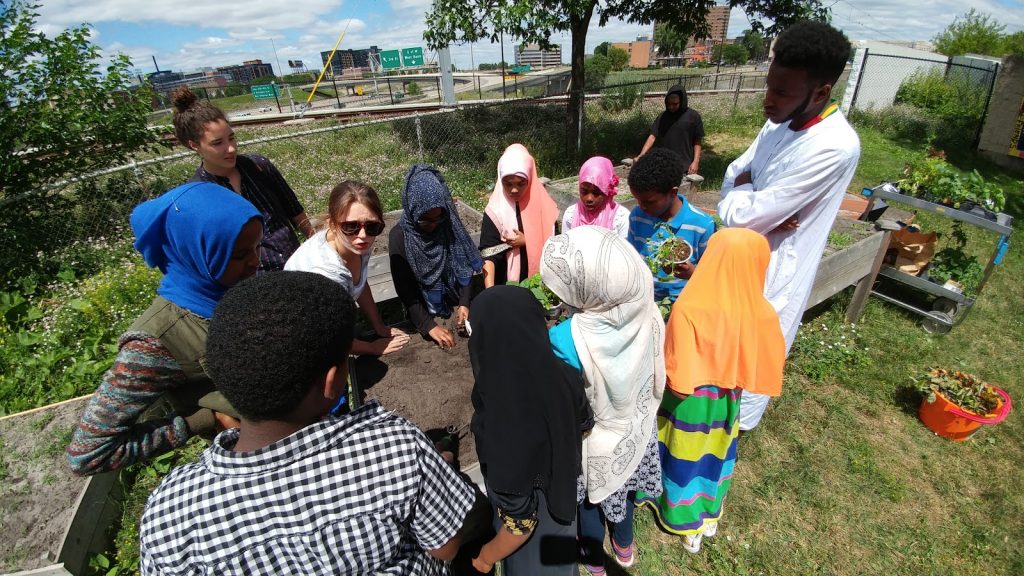
Community-based learning is a form of experiential learning directly connects students withĚýthe broader community and neighborhoods of which Augsburg is a part. Individual students and whole classes connect to community organizations through various means, including field trips, guest speakers, research, service learning, and public impact projects. These deliberately chosen experiences are guided by principles of mutual benefit for students and the community, are designed collaboratively with campus and community partners, and are based in deep and ongoing relationships with individuals and community groups. All community-based learning requires students to engage in meaningful reflection on their experiences.


Field Trips

A professor may plan a field trip for her course to a local organization or site so that students can experience first hand a context that might be referenced in class. Such a trip may offer opportunities to host discussions with local experts, understand an applied context, and to stimulate questions that may not otherwise occur to students in the classroom setting.

Examples

Religion classes tour houses of worship of different faith traditions, with tours conducted by practitioners of those traditions, some of which are in the Cedar-Riverside Neighborhood nearby to campus. These visits are followed by in-class discussion and a comparative reflection paper that prompts students to reflect on the visit as well the connection between visit themes and their own experience.

Students from a food science class visit a nearby beekeeping company who keep urban hives to learn about the science of honey production and about the economy of urban farming.

Guest Speakers

Guests from the local community may visit a relevant class session to share their experience and insight and engage in discussion with students.

Example

An organizer from a local labor rights organization visits a history class focused on 20th-century American labor rights movements.

Research

Research that is conducted as a partnership between traditionally trained “experts” and members of the community for the benefit of both.

Example

A group of students in a business course collaborate closely with a local youth social enterprise to do market research and develop a marketing plan. While the social enterprise ends up with a functional marketing plan that they can now implement, the students have learned applied skills for research and developing an end-product for a customer’s use while building connections with a community-based organization with connections to Augsburg and significant local impact.

Service Learning

Sometimes used interchangeably with community-based learning, service learning is a specific kind of learning activity in which students participate in and reflect on a service-oriented activity in the community. This may be a one-time “service project” experience, but more commonly involves ongoing involvement by the student in a community organization over the course of a semester (usually at least 20 hours). The activity is directly related to course content, and benefits the community.

Example

As part of the class, a student in an Social Work 100 class signs up to regularly serve meals to the after school program at Brian Coyle Community Center with the Campus Kitchen program.

Public Impact Project

Public impact projects are sustained experiencesĚýthat integrate meaningful public engagement that is mutually beneficial to students and the community. Instruction and reflection in a community context enriches course content, teaches civic responsibility, builds community capacity and relationships, and often connects to university-wide community engagement initiatives.

Example

Students from Design+Agency, Augsburg’s embedded design studio, create design solutions forĚýa variety of local non-profits and civic projects.

Interfaith Scholars collaborate with community members to put together monthly interfaith gatherings in the Cedar Commons space.
Guiding Principles for Community-Based Learning

Whether you are planning a , there are certain elements and factors to consider and incorporate. All community-based learning, from activity to long-term project, requires careful planning, connection to course objectives, collaboration with the community partner to identify need, intended impact, and responsibilities, as well as opportunities for quality reflection.


When planning for community-based learning, be sure to consider the following:

Consider Impact

Think about all facets of impact. For example, if you are taking your students to a community space–what do they need to know about the space beforehand to be respectful of the people there and the space itself? When asking an individual to come speak with your class, is there a way for the class to thank the presenter?Ěý

Community Partners are Co-Creators

Ensure that the activity or shared work has mutually beneficial outcomes for your students and the community or organization. Especially when planning longer term projects or research in a community-based context, the outcomes of the work should have value beyond student learning, and the need and intended product should be identified in conversation with the community partner. Collaborate with the community partner–whether that is an organization, business, etc–as a co-creator of the course design, learning outcomes, and/or research goals.

Engage in Relationship

Engage based upon relationship. Build on existing university connections (there are many–be in touch with us in the Sabo Center to learn more!), or use your own connections. For the sake of students, vet the organizations or people they may be working with. Establish a trusting relationship with a community group or organization before expecting a student to contribute time and energy.

Clear Parameters

Be sure to establish clear parameters for students about the connection between the community-based learning and the course’s educational goals, objectives, and learning outcomes. Offer clear guidance about what is to be accomplished and learned, and emphasize the student’s responsibility and the reality of the impact their actions might have.

Prepare

Prep students for what to expect and what is expected of them in the context of a community-based learning opportunity, whether that is a field trip or a long term project. Engage in reflection with students before the activity or project–what do they expect to learn? What do they want to learn? What are some things they think they know from the jump? Have students attend a scheduled community-based learning orientation with the Sabo Center, or coordinate with the Sabo Center to bring someone to do an orientation with your class.

Reflect

Quality reflection is essential for effective community-based learning, and for all experiential learning. Build in opportunities for structured and varied forms of reflection, and communicate clearly about how this reflection will be evaluated.


Want guidance for how to get started?Ěý Contact Director of Community Engagement Mary Laurel True (truem@augsburg.edu).

Place-Based Community Engagement


Augsburg University has a long history of deeply-rooted and long-term work in Cedar-Riverside neighborhood and the surrounding community, an approach known today as place-based community engagement.ĚýIn fact, part of the reason Augsburg moved to Minneapolis in 1872 from its first location in Marshall, Wisconsin, was so that seminary students could gain experience serving city congregations in Cedar-Riverside and across the city. This commitment to place-based engagement has been affirmed and sustained across our history, fromĚý’s call in the 1960s for faculty to embrace the modern metropolis as both classroom and place for contribution to the public good, to our early leadership in the field of service-learning, and the mission of the Center for Global Education and Experience.ĚýOver the last thirty years, dedicated staff and faculty have established and maintained numerous partnerships with local neighborhood organizations and individuals, connecting students, faculty, and community members. These partnerships are grounded in trust built on long-term, reciprocal relationships, and support a variety of initiatives and projects. Augsburg has continued to uphold these efforts through funding staff positions focused on community engagement, and prioritizing experiential education as part of the university’s mission and strategic plan.

Examples of this place-based partnership work in Cedar-Riverside include:

Cedar Riverside Community School

Place-based community engagementĚýis defined as “a long-term university-wide commitment to partner with local residents, organizations, and other leaders to focus equally on campus ad community impact within a clearly defined geographic area.” [1]ĚýEngaging with stakeholders from across the university and neighborhood community, a place-based approach aims to enact real and meaningful social change through partnership and co-creative work.

In recent years, Augsburg has engaged with a cohort of higher education institutions from across the country who are similarly interested in deeply focused, long-term, and place-based community engagement work. Recently formed into a formal organizational network, the Place-Based Justice Network (PBJN) consists of twenty member institutions that participate in annual summer institutes, continuous learning opportunities, leaderships retreats, and other activities focused on place-based community engagement in higher education.Ěý

As a network the PBJN aims to transform higher education and the communities surrounding them by actually working to deconstruct systems of oppression through a place-based community approach. The values of the network emphasize anti-oppression, anti-racism, intersectionality, self-determination, and deliberative process. This move toward an explicitly anti-oppression framework is an important and unique shift in the field of university community engagement, and one which we strive to incorporate deeply into our ongoing place-based work.Ěý

[1] Erica K. Yamamura and Kent Koth,ĚýPlace-Based Community Engagement in Higher Education: A Strategy to Transform Universities and Communities,Ěý(Sterling, VA: Stylus, 2018), 19.

Marina Christensen Justice Award

Every year at Commencement, one graduating senior receives the Marina Christensen Justice Award for demonstrated dedication to community and working in solidarity with under resourced communities. This award recognizes work that is in keeping with the personal and professional life of Marina Christensen Justice.

NominationsĚýare submitted in the spring with nominations for other , and are judged on the following criteria:

  • The depth and breadth of community involvement
  • A strong commitment to addressing the systemic roots of the issues
  • A personal and professional commitment to work with under resourced communities
  • Bold and courageous leadership
  • Authentic and sustained engagement with community and issues.

Minnesota Campus Compact Award Winners

Each year Minnesota Campus Compact presents awards at their annual statewide summit. At this year’s summit, an Augsburg student, staff member, and community partner were recognized for their leadership andĚýcollaborative work. The 2018 award recipients were:

Student Leadership Award: Janet Nguyen

As the student food shelf coordinator this year, Janet built a base of committed volunteers, increased participation and donations, and even navigated a successful recovery from a small fire. Janet brought a bold, equity-focused lens to the food shelf by diversifying offerings and working to destigmatize food insecurity.

Civic Engagement Steward Award: Jane Becker

Jane Becker, Augsburg’s Head Volleyball Coach, organizes more than 500 athletes and their coaches each year to engage with youth in the Cedar Riverside neighborhood and beyond. She has created new summer sports clinics, an on-campus homework help program, and an alternative spring break program for young people.

Community Partner Award: Cedar Riverside Community School

Cedar Riverside Community School is the only school in the Cedar Riverside constantly adapts to best serve the educational needs of an ever-changing population. School leaders and teaching staff are committed to deep, reciprocal partnership with Augsburg, so that CRCS and Augsburg students are prepared successful futures.


MARTIN OLAV SABO SYMPOSIUM: Are the “Nones” Done with Civic Engagement?

Organizing the religiously unaffiliated in today’s climate of polarization.

ThisĚýsymposiumĚýfeatures an address by Phil Zuckerman, professor of sociologyĚýand secular studies at Pitzer College in Claremont, California,Ěýwith responses by Jacqui Frost and Evan Stewart of theĚýUniversity of Minnesota.

A panel of community organizers and elected officials, moderated by Penny Edgell, will follow the address.

Wednesday, February 28th
6:00-8:00pm
Hagfors Center for Science, Business, and Religion

This event is free and open to the public.

Serving up food and fun with Campus Kitchen Step-Up interns

Hi my name is Davonte and I worked as one of summer Step-up interns and it was my first ever job experience. Over the summer I’ve acquired a variety of job experiences and practiced many skills such as cooking, gardening, and researching food systems. Every Monday through Thursday I served food with the youth at the and on Saturday I participated in the gleaning at thewhere we collected fresh donations of produce and gave it elders at The Cedars senior apartment building in Cedar-Riverside. It was a lot of hard work but it was also very fun and well worth the time. For example, going to the Guthrie Theatre during my shift on Saturday to enjoy the views made the time go so much faster.

This summer while cooking I learned new things such as new recipes made from fresh and healthy ingredients that ended up tasting really good like zucchini muffins and cucumber popsicles. Also one of my favorite parts of the job was just making other people happy by giving them food. It’s a rewarding experience.ĚýĚý

-Davonte


Hey, my name is Raykel and this past summer I worked for Campus Kitchen through the Minneapolis Step Up program. “What’s Campus Kitchen you ask?” Well Campus Kitchen is a food organization that is basically built off of donations. Any food not used in the Augsburg kitchen that has already been prepared but wasn’t eaten is given to Campus Kitchen to be reused. We have a wide variety of the kinds of food that we get, although once the food is put into the fridge we have a week to use it and most times it gets used and if not we freeze it. Another question you probably have is “Where does the food go once prepared everyday?” Well, Monday-Thursday the food is made and distributed to the Brian Coyle Center, for the children and even the adults (depending on how much we have left) but kids always eat first. Fridays, twice a month we take food to the elders at Ebenezer Tower Apartments and eat dinner with them. Campus Kitchen is like an organization that is always giving back to the community. Did I mention the garden where the community gets together and growsĚýwhat they want to?

This job gives many opportunities. For instance, you meet people at a college and you learn things about the college that you didn’t know before. Also, you can put it on your resume. Plus if you ever need a job when you come to college then you know a place that you don’t even have to leave campus for. There were many memories and skills that we made and learned over the summer but there’s a couple that stand out to me:Ěý knowledge of plants and knowledge of cooking in the kitchen. For two weeks in the summer time we had a gap in our schedule because the Brian Coyle Center was shut down so we helped out MN Urban Debate League camp. During, before, or even after their lunch we always could eat lunch so who wouldn’t go back for 3rds? This job helped me gain a lot of knowledge about many things and I’m very grateful for a great job.

Here’s some photos from the summer time:

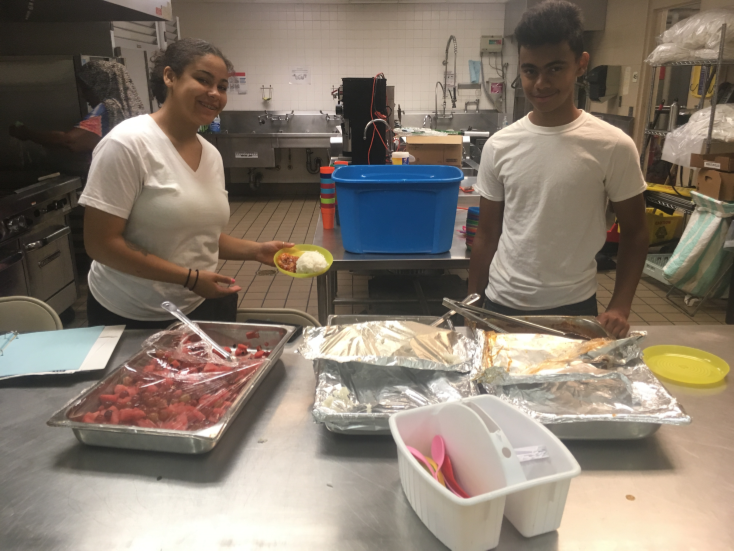
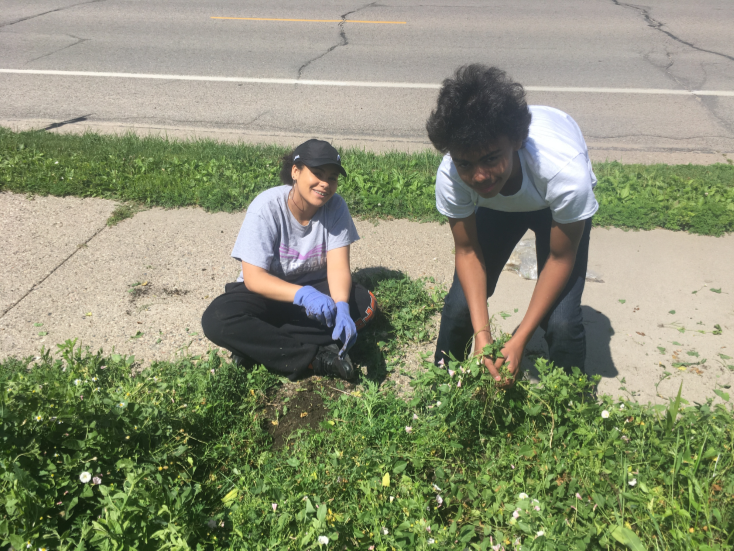
1st photo is from the Garden

2nd photo was when we prepared the food by ourselves

-Raykel N.


Interfaith at Cedar Commons Fosters Connection, Understanding

Attendees at an Interfaith at Cedar Commons event share a meal and conversation.

Twice a month, students and community members gather in the Cedar Commons space adjacent to Augsburg’s campus, intentionally coming together to build relationships across faith and non-faith traditions and learn from each other’s experiences, stories, and convictions. Coordinated through the Sabo Center for Democracy & Citizenship, Interfaith at Cedar Commons is one of many initiatives based at the Sabo Center that connectĚýthe Augsburg campus and the wider community. Gathering around a topic and often a meal, participants discuss subjects ranging from Islamophobia to religious holidays, human rights, political activism, and creation stories. The inter-generational group involves faith communities from the Augsburg campus and the Cedar-Riverside neighborhood, and integrates theĚýInterfaith Scholars program, cultivating student and community-based leadership.

Shoshana Freund and Bethany Keyl are two Augsburg students who have been involved with Interfaith at Cedar Commons as current or past interns with the core team of students and community members that plans the gatherings. They described the interfaith events as open, welcoming spaces where topics and faith and non-faith perspectives are understood to be complex. For Shoshana, an atheist, the complexity of these discussions were refreshing. Speaking from her experience on the planning team, Shoshana described how the topics chosen for the events are designed to help people from all paths–including those who do not practice a religion–to find common ground through storytelling and experience sharing. Often this leads to new, profound understandings of people and communities who might otherwise have remained “Other.” Interfaith is an opportunity for students and others to see that “people of other belief systems are not antagonists,” Shoshana said. “Their beliefs don’t exist to contradict yours.” Bethany noted that the gatherings are an opportunity to find “common ground” and to “foster understanding” through the experiences and stories of people who come from different traditions.

Beyond story-sharing and relationship-building, Interfaith at Cedar Commons is also focused on building skills for inter-faith organizing. Activities such as power-mapping, one-to-one trainings, and other aspects of community organizing have been regular additions to the 2016-17 school year interfaith meetings. These skill-based sessions, along with the practice of having nuanced and complex conversations about meaning, core commitments, and the role of different faith traditions in the world with community members from campus and beyond, makes Interfaith at Cedar Commons a program that embodies the Sabo Center’s commitment to “create a culture of civic agency and engagement among students, faculty, staff, and our broader community so that graduates are architects of change and pioneers in work of public significance.”

Jane Addams School for Democracy comes to a close

After twenty years of democratic education and practice, the Jane Addams School for Democracy met for the last time earlier this month. From the beginning, its founders sought to free and cultivate the talents, cultures, and interests of people from diverse backgrounds and traditions and engage in a minimally structured, non-hierarchical way that allows participants to shape the agenda. The Jane Addams School for Democracy brought immigrant families, college students and other community members together to do public work and learning. It was inspired by the vision of democracy, productive citizenship, and popular education held by settlement house pioneers like Jane Addams, who created Hull House in Chicago in 1889.

As we consider the current state of our democracy, the principles and practices of Jane Addams School are a much needed antidote to the polarization and division that colors public discourse. We have faith that the lessons of Jane Addams School can continue to support a more just and democratic world. In 2007, the Kettering Foundation published a book called Voices of Hope: The Story of the Jane Addams School for Democracy which features 22 essays by 12 Jane Addams School participants, including non-native English speakers, and more than 75 photos.

Cooking and building community with Campus Kitchen!

20160627_135606Hello! Kenani and DJ here, Augsburg Campus Kitchen’s summer 2016 Step-Up Interns. This summer we were placed with for our first ever job through the City of Minneapolis Step-Up program. All summer we have been cooking and serving meals for youth at the Brian Coyle Center summer program. In addition, on Mondays, we helped teach gardening, cooking, and nutrition lessons to Brian Coyles’ K-8th graders. The theme for the summer was Top Chef and each week we had a cooking competition and awarded three participants Top Chef of the week. Thanks to grant support from , These students were able to bring home a bag of groceries and recipes to their families so they could recreate the meals with them.
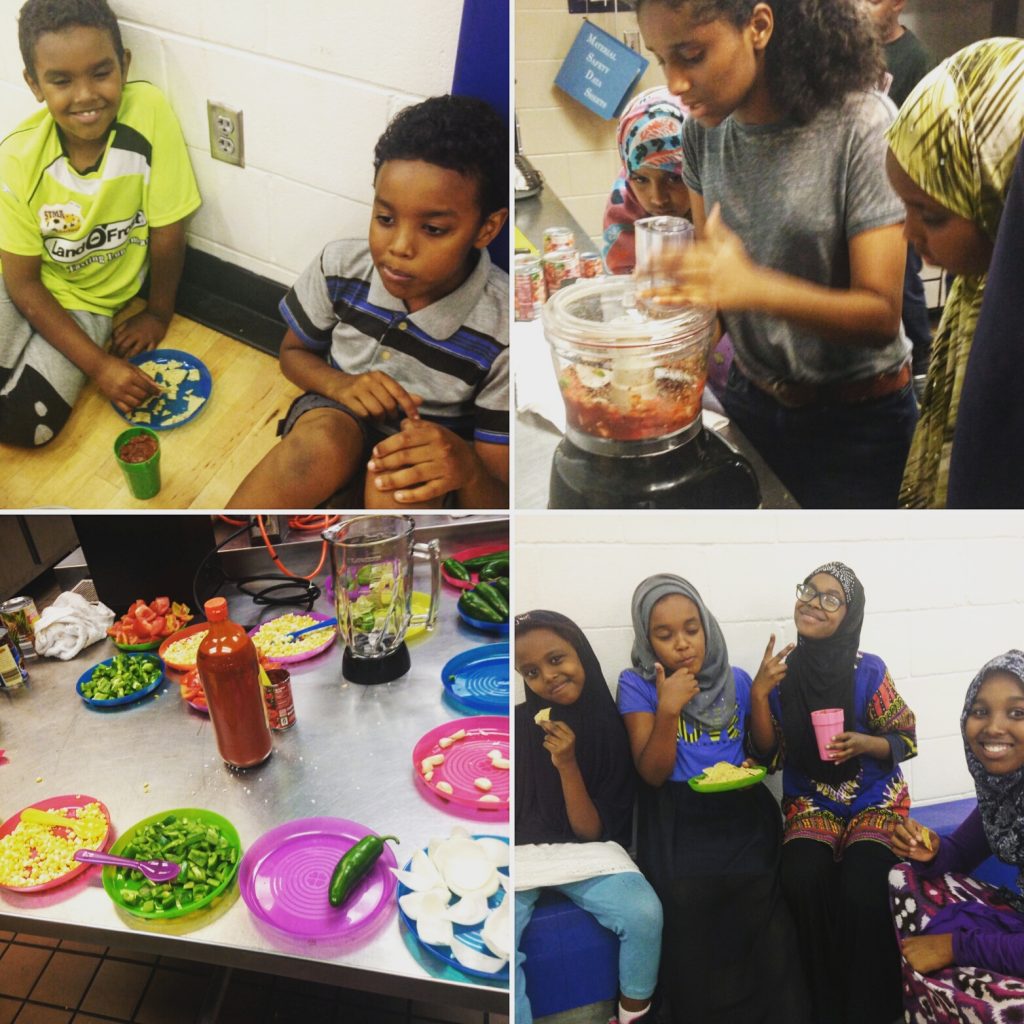
IMG_20160818_120719This past week in Top Chef we had a salsa competition where students were given a certain amount of fake money to buy the fresh ingredients to make their special salsas. The students had to be creative in making unique salsa while still making sure they had enough money to buy all the ingredients for their salsa. The kids had tons of fun making salsa and many of them were surprised how good their salsa turned out. For instance, a few students challenged themselves by putting less common ingredients such as black beans or pineapple in their salsa and still ended up loving it! We were really impressed that almost all the students liked their salsa – we learned it is almost impossible to make bad salsa from fresh ingredients!

Throughout the summer we learned about a community that is different than our own. We realized how everyone in Cedar-Riverside seems to know each other and how connected they are to their community. Even though we were out of our comfort zone a little at first we were able to make new friends and learn new things, not to mention becoming all-star dishwashers and building our resumes!