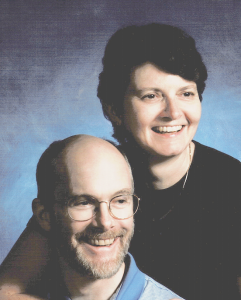
It is with a heavy heart, we share the news that Fuad El-Hibri passed away peacefully in his sleep early in the morning of April 23, 2022, surrounded by his family at his home in Maryland after a heroic battle with pancreatic cancer.
Fuad has made a tremendous mark on Augsburg over the past two decades. Fuad and his wife, Nancy, first learned of Augsburg in the early 2000s when their son, Karim ‘06, participated in the StepUP program. Fuad and Nancy served as inaugural co-chairs of Augsburg’s President’s Council, and Fuad was instrumental in forming the current strategic plan Augsburg150. Fuad and Nancy most recently made a generous gift to create the El-Hibri Endowed Chair and Executive Directorship of the Interfaith Institute at Augsburg and has annually sponsored Iftar dinners for the campus during Ramadan.
“The Augsburg community has lost a dear friend with the passing of Fuad El-Hibri,” President Paul Pribbenow remarked. “Fuad and his family have been generous with their time, wisdom, and gifts to support me and our community as we advance Augsburg’s deep commitments to collegiate recovery, interfaith dialogue, and student success. Fuad was a role model for our students as he combined his faith, his business acumen, and his love for his family in all that he pursued. I will miss him and know that his legacy will live on at Augsburg and beyond.”
Fuad was the Founder and the Executive Chairman of Emergent BioSolutions Corporation, Chairman of East West Resources, and Chairman of Aptevo Therapeutics. He retired from those positions on April 1, 2022. He was also a member of the Advisory Board of the Yale Healthcare Conference, as well as serving on the Board of Directors of the International Biomedical Research Alliance. Fuad, Nancy and their children, are also on the Board of the , started by Fuad’s father in 2001. Fuad and Nancy have three children and three grandchildren.
“Faud was a compassionate, visionary leader who cared about people in a very personal way. This was evident in the way he supported the Muslim students at Augusburg,” shared Muslim Student Program Associate, Fardosa Hassan.
Augsburg’s Board Chair, Matt Entenza, said “Fuad has been a good friend to Augsburg and to me over the years. I will miss his passion, counsel and our many energizing conversations.”
Fuad believed in the possibility of a world where any young person could feel welcomed and encouraged to pursue their potential on any college campus, no matter their faith tradition. He was a leader in interfaith peace-making and dialogue, believing much could be resolved if we listened and learned more about one another. Fuad will be greatly missed by the Augsburg community.
. Check out the pictures below that highlight his visits to campus.
Fuad with the 2019-2020 Interfaith Scholars: Abbey Garofalo ’21, Ava Fojtik ’20, Oluwatofunmi Oteju ’21, Abdikhaliq Sahal ’20 and Isaac Tade ’21
Photo of Fuad speaking to a group of Augsburg students in October, 2019
Fuad and Bishop Mark Hanson ‘68 discussing the future of the Interfaith Institute
Fuad El-Hibri, Dr. Maheen Zaman, Professor in Augsburg’s History Department, and Augsburg Board Chair Emeritus Matt Entenza.
Augsburg is gearing up for this year’s Give to the Max Day! This year’s goal is to have 1,869 Augsburg donors participate during Give to the Max Day, which would make it our largest giving day ever!
Auggie passion is the fuel that drives strong donations on Give to the Max Day, and that’s why it is Augsburg’s biggest fundraising day of the year. It is exciting and inspiring to hear your personal stories about Augsburg and why you are passionate about supporting a particular cause.
So far we have the projects listed below fundraising this year during GTMD, with more participating every day. If you would like to help advocate for one of these projects, or advocate for a new project, we would love to hear from you. You can send in a at Augsburg, and you can be featured in our Give to the Max Day campaign.
Please contact Chris Bogen ‘09 by October 15th with videos or questions at bogen@augsburg.edu.
Lars Sandven ’69 holds a photo of himself standing with then Augsburg President Oscar A. Anderson and King Olav V of Norway who visited Augsburg in 1968.
Many who benefit from an Augsburg education say thanks by designating a gift to the University in their estate plan. But only a few pepper their lives with intriguing thank-you stories along the way. Lars Sandven ’69 is one of those.
The son of Norwegian farmers, Sandven was completing his compulsory service with the Norwegian air force in 1965, stationed north of the Arctic Circle at a base that also served American soldiers training in the frigid elements. At night he taught English, capitalizing on the year he had spent as an exchange student in Pennsylvania, for extra pay. During the day he worked at a desk job, “shoveling paper.” One of his duties was to file government newspapers, each issue a four-page compilation of name changes, divorce decrees, and other essential ephemera.
“I was supposed to just put them away, but I had plenty of time. So I read them. I happened to see an ad from the American-Scandinavian Foundation about a new Augsburg scholarship in honor of Norway’s Crown Prince Harald V. I was fluent in English, so I applied,” Sandven recalls. His application was accepted; the scholarship was his.
“It was so funny—they called from the palace! It was a big deal. I have an image of the lieutenant, my boss, standing at attention while he talked to the royals in Oslo,” he says. Returning home on leave, he discovered that they had first contacted his small town in fjord country. “It sounded like a fairy tale. The ladies at the switchboard were all abuzz. It was very humorous.”
Sandven knew little about Augsburg, of course, and having just lost his father to a farm accident, lacked travel funds. When the ASF “asked sweetly” whether he might need some help, he accepted. Passage on a boat shipping out of Bergen was negotiated, as long as he was willing to join the crew, loading fruit, aluminum bars, and other cargo as necessary. After navigating the Atlantic and the St. Lawrence Seaway, he disembarked in Montreal and took a Greyhound bus to Detroit and then St. Paul.
“I got there in the morning, very disoriented. I never got a sense of direction in the Twin Cities. It was so flat—no Eiffel Tower, nothing,” Sandven, then 21, remembers with a chuckle. He moved into freshman housing, where he secreted Wonder Bread and margarine (it melted) in his metal locker to help stretch his limited finances. To supplement his one-year scholarship, he taught Norwegian as an “instructional assistant” while the Augsburg professor was on sabbatical, worked summers at the Concordia Language Camp, dug ditches, painted walls, translated for pastors, and donned a Beefeater costume to wait tables at the Sheraton Ritz Hotel’s Cheshire Cheese Olde English Beefe House. He was paid $100 to join three other foreign students and two American drivers on a six-week, cross-country, Ambassadors for Friendship road trip. Organized by Macalester College and underwritten by American Motors, the experience was “eye-opening,” memorable and meaningful, with homestays in locations ranging from Salt Lake City and New Orleans to Las Vegas (where he got lost) and Nogales (where he slipped across the border for a beer). He also worked in the kitchen at the Minikhada Country Club; his colleagues there served him and his mother a fancy dinner when she visited Minnesota. Thanks were in order on all fronts.
After finishing his Spanish degree in three years, Sandven (and his skis) shipped home to the University of Bergen, where he met his California-born wife, Ann. It was during a celebrity-studded World Cup event, at an intimate party of about 20, that he got the opportunity to thank Crown Prince Harald directly for his scholarship. “We came full circle. After I got home, the staff sent me a Christmas card from the palace with a picture of the royal family and a note that said, ‘come and see us while you are in Oslo.’ I was feeling very ‘close’ to royalty for a while,” he jokes. (He had met and been photographed with Norway’s King Olav V during the king’s 1968 Augsburg visit.)
Following a rather common path of first-generation farm kids becoming teachers, says Sandven, he taught elementary school in Oslo. He also worked in television before he and Ann headed back to America, two small sons in tow. In 1982, the growing family settled in Boise, Idaho, where he worked as an educator and school counselor before retiring. His sons graduated from Stanford and his daughter from Lawrence University in Appleton, Wisconsin; all have thriving careers, and two of them have settled their families in his home country.
With their planned gift, Sandven sums up his gratitude and expresses appreciation for his philanthropically inclined wife. “It’s a thank-you to Augsburg, and a way to help others who were like me,” he says. “It’s wonderful to be able to share our blessings, both of us.”
Lisa Zeller ‘81 has long been a vocal and enthusiastic fan of Augsburg. She was part of the first class to complete the Master of Arts in Leadership (MAL) degree in 1989, and she was a founding member of Augsburg Women Engaged (AWE). She volunteers regularly for both and supports their fundraising initiatives regularly. But her latest effort—to support the endowed AWE scholarship with a substantial estate gift—is born of a deeper connection.
The first in her family to attend college, Lisa did not have the usual college experience. Shared dorm or house living, evening study sessions, weekend parties, and fun with friends were not for her. Her mother was a single parent who “struggled her whole life. Money was always a worry,” Lisa recalls. Yet “my earliest memories are of her instilling in my sister and me that we get an education and become self-sufficient. She planted those seeds early and strong.”
At church, Lisa had noticed two posters, one for Pacific Lutheran University and the other for Augsburg. Pacific Lutheran was too far away, so Augsburg became her alma mater. But tight finances meant she was living at home, working several jobs, getting parking tickets on a regular basis, and devoting all spare time to her studies. “I was shy and introverted, although I loved college. The one thing I regret is that I had no social life. I think that is actually a big part of why I’m involved now.”
Lisa majored in communications and religion, the latter surprising her. While taking the requisite classes, she discovered that she loved studying religion and philosophy that went beyond Lutheranism and Christianity. Undecided about her future, she considered going into the ministry until one of her business professors explained that “the business world needs good, ethical people, too.” She pursued an advanced business degree elsewhere but found that accounting and statistics classes felt “like sticking needles in my eyes. I hated every second.” Augsburg, on the other hand, was “talking about creativity and a whole new liberal arts approach to leadership. If I could have designed my own program, MAL would have been it.”
As part of the first cohort, Lisa made the lasting friendships and connections she missed the first time around. “It was such a great experience,” she says. “I give so much credit to Augsburg for my self-discovery and becoming who I am today. No one had told me I was smart before. Augsburg helped me cultivate my passion and interests.”
She embarked on an eclectic business career and in 1994 founded the Phaedrus Group, a training and consulting firm she still runs with her husband. As a member of AWE, Lisa has observed that women approach philanthropy differently from men, seeking more connection with causes and recipients. Her planned gift to the AWE endowed scholarship provides just that. This scholarship exists to support Auggie women, especially those who are first-generation, students of color, or other underserved populations, so perhaps they will be able to earn a degree without giving up friends and fun. It is her way of paying it forward.
“I’ve had an opportunity to meet the first two AWE scholars, and these young women inspire me and give me hope for the future. It is so fun to cheer on this generation of women!”
In memory of his parents and in celebration of his brother, Augsburg professor emeritus Stuart Anderson, Brian J. Anderson ’82 and his wife, Leeann M. Rock ’81, are donating $50,000 to endow a scholarship designed to encourage future students’ “rigorous education and academic excellence.” Yet the rich legacy that accompanies this gift goes far beyond those lofty goals.
Brian’s father, the late Dr. Raymond E. Anderson, joined Augsburg in 1949 as a speech and communications professor, helping to establish the department now called Communication Studies, Film, and New Media. Students adored his wry sense of humor as well as his warmth and compassion. He made his speech classes “fun” while maintaining high standards.
“He was very committed to his students, but he demanded the best from them,” says Brian, naming several who used those formative public speaking classes to build acclaimed careers: the late U.S. Representative Martin Sabo, who served Minnesota’s 5th District for 14 terms; Rev. Mark Hanson, former presiding bishop of the ELCA; and Minnesota District Court Judge Bev Benson. “He was also committed to honesty and integrity. When a student once admitted almost proudly that she would say anything in a job interview just to get the job, my father explained that if he were asked to write a recommendation letter, he would disclose that fact to the interviewer. He had standards, and he stuck to them.”
Brian remembers his dad coming home and “working like a dog” till 9:30 at night, listening to speeches so he could grade and return them promptly. Brian also remembers him confessing that he loved his job so much that he felt guilty getting paid to do it. A man with many interests, including trumpet, piano, painting, woodworking, and writing, Ray retired in 1990 and died in 2013.
Brian’s mother, the late Margaret J. Anderson, joined Augsburg in 1967, using her master’s degree in library science and the college’s limited resources to make Augsburg’s library the best it could be. She became library director in 1977, and, after retiring in 1990, continued to volunteer for cataloging and archiving projects. She, too, was known for diligence and deep commitment to community and family as well as her own violin, cuisine, and literary pursuits. She died in 2017.
That Brian should follow his older brother, Stu, to Augsburg is little wonder. Stu was to become a physics professor; Brian majored in math, physics, and religion. In recent years, Brian strongly supported the Hagfors Center for Science, Business, and Religion and has followed closely Stu’s leadership challenges and successes with its development. “All of my majors were right there, which made it special. It was fun to be in on it from the inside,” says Brian.
During college, grammar had not been Brian’s strong suit. He confessed his strategy in freshman English: “raise your hand immediately if you knew the answer so later the teacher would skip you when you did not.” The girl who sat behind him, alphabetically in Old Main’s narrow classroom, always knew the answers, he reports. That was his future wife, Leeann Rock ’81, who had accompanied a friend pursuing a music major to Augsburg’s Discovery Day. Leeann had planned to attend a different college, but when she heard biology professor Neal Thorpe speak, she was hooked.
Brian earned his Ph.D. in physics at the University of Minnesota in 1987 and taught briefly at Augsburg before joining The Johns Hopkins University Applied Physics Laboratory, where he often hosted summer interns referred by Augsburg physics professor Mark J. Engebretson. Leeann obtained her M.D., also from the University of Minnesota, and is a pathologist at Frederick Memorial Hospital. Now living in Mount Airy, Maryland, both want to honor Brian’s parents, who were so instrumental on campus during their lives. Endowing a scholarship seems like a natural next step, Brian says. “It’s a formal way of maintaining our relationship with Augsburg while ensuring more opportunities for students in the future.”
He played football. She ran cross-country. Although they first met as freshman members of the Fellowship of Christian Athletes, Mark Moksnes ’79 and Pam (Hanson) Moksnes ’79 were focused on their studies and busy with their sports. He was a sociology and social work major with an eye on the seminary. She was a psychology major and biology minor, considering dental school.
The two started dating in senior year and married soon after college, although neither knew for sure where their paths would take them. But they did know that Augsburg had provided a strong foundation, not only in faith-based education, but also in community service and outreach. Perhaps they knew, too, that their allegiance would make charitable giving essential to their lives, allowing them to share those benefits with new generations.
Mark built a business career as a sales and marketing executive with Delta Dental and Anthem. A postgraduate financial planning education launched Pam into a career that combined financial management and charitable giving, providing expertise that served others well in her work with Thrivent Financial and the Lutheran Church-Missouri Synod. Now parents of three college-educated children and five grandchildren, the couple has donated to Augsburg causes throughout their lives, most recently giving an unrestricted endowment to Great Returns: Augsburg’s Sesquicentennial Campaign.
“We feel called to support Augsburg’s mission, just as we always have,” says Mark. Earlier in their marriage, however, giving to Augsburg meant going out on a limb, a scary prospect for a young family. “We didn’t know where the money was going to come from, or how. It’s amazing what happens. God just provided. Those are his resources, and we put our trust in him regarding that. We just absolutely love being able to share.”
“That we have continued to be so engaged with Augsburg has enriched our lives,” adds Pam, a Board of Regents member since 2013. Their daughter, Laura Moksnes ‘06, earned a psychology degree at Augsburg and a Master’s degree at Pepperdine University, later returning to Augsburg as an adjunct professor.
Pam’s professional experience in charitable giving offers a valuable perspective. What kind of gift is best? “Whatever the donor wishes to do is the right thing, of course,” she says. “Giving can be so joyful for the giver. People who have been touched by Augsburg make these connections in all kinds of ways.”
While some choose to address immediate needs, Pam and Mark believe that an unrestricted endowment can be even more gratifying and beneficial in the long run. “We all know that in today’s world, with all the political and financial changes in our economy, the challenges to universities and other organizations are substantial. A strong endowment helps ensure that Augsburg can respond to these changes and stay ahead of the curve in planning,” she says. “I feel like it’s the right thing for us.”
Raising awareness about the impact of unrestricted giving is important as well. Since no one can predict the future, Augsburg needs a strong, solid financial base to adapt and serve, to fulfill its mission no matter what needs may arise at any given time. “Ensuring that our foundation stays in place will also serve the community, so tomorrow’s leaders will leave Augsburg ready to serve the world in an ethical, moral, and faith-based way,” says Pam. “That is the Augsburg mission in action.”
“Our greatest glory is not in never falling, but in rising every time we fall.” – Confucius
The StepUP Gala was a night to celebrate how the StepUP Program at Augsburg University has helped students champion lives of recovery, achieve academic success, and thrive in a community of accountability and support.
With the strength and support of the StepUP community, we rose to meet this goal. This year’s Gala generated over $425,000 for the program in one evening. The event was thoughtfully planned by the StepUP Board and the Gala committee including co-chairs Cindy Piper and Douglass Sill.
Highlights of the Gala included:
Nearly 350 guests in attendance
Emcee Leah McLean, from KSTP 5 Eyewitness News
Neil King ’18, Alumni Speaker
Alexa Anderson ’19, Student Speaker
Toby Piper LaBelle Award recipients Jon and Julz Schwingler
A special appearance by Senator Amy Klobuchar
We hope to continue to build on this generous momentum from the Gala. If you wish to make a gift to support the StepUP program, visit StepUP Giving and indicate Gala gift in the comments field.
Thank you to all who joined us for the “We Rise” StepUP Gala. We firmly believe that a student should not have to choose between recovery and a college education. Your support will help make that possible today, and for years to come.
Sometimes a match made in heaven requires a connection here on earth. Such is the case with Linda Giacomo, whose generous gifts to the Augsburg Women Engaged (AWE) Scholarship fund are the outcome of a chance meeting.
Giacomo, 67, is a retired clinical psychologist who speaks freely of her two passions: helping women get educated and helping them get elected to political office. When she met Catherine Reid Day, an Augsburg friend, donor, and strategic marketing consultant through her company, Storyslices, at a political event last May, the two talked about the interests they shared. What ensued was as unlikely—yet as likely—a serendipitous result as anyone could imagine.
In so many ways, Giacomo and Augsburg are a matched set. An Italian-American who hails from Port Chester, New York, Giacomo knew in her teens that she wanted to work with children, perhaps in elementary education. But a comment by her younger brother—“Stop talking to me like you’re a psychologist!”—led her to study psychology at SUNY-Buffalo, then earn a Ph.D. in child clinical and adult psychology at Michigan State University.
“It was fascinating,” she says. “It combined everything I’m interested in: people—what makes them tick, why they feel and do things, being intellectually challenged, and helping others. It was a perfect fit.”
After post-doctorate work in Philadelphia and other positions that proved too research-heavy, she moved to Minneapolis for a clinical position at Children’s Hospital, then went into full-time private practice five years later. After retiring, and with much appreciation for the area’s affordable real estate, bike paths, parks, and “just enough” theater, art, and music, she has stayed. So has her propensity for research.
After learning more about Augsburg, she did her homework. “I have had patients who went there, but I knew very little about it,” she says. “Having gone from having no money to probably being considered fairly wealthy, I was looking for an estate beneficiary. I have no loyalty to any particular institution, but I do have a great commitment to representation, especially of women in the faculty and administration.”
She studied Augsburg’s numbers—need, diversity, solvency, service—and visited campus to meet its leaders. What she found was common ground. Like so many Auggies, she was the first in her family to attend college, earning merit scholarships but still needing a decade to pay off student loans. She empathizes with immigrant struggles, recalling impoverished grandparents who left southern Italy to become naturalized U.S. citizens, and parents who could not afford their children’s college tuition despite her father’s three jobs and her mother’s one. She also inherited a legacy of service, after watching her family take in neighborhood children and offer help to anyone in need.
“There are people who say they care, but care is just a word if you don’t act,” says Giacomo. “In my practice, my one concern was to make sure I didn’t leave behind the people who had no money. I never turned a patient away for lack of funds. About a third of my patients paid whatever they could afford.”
Giacomo reviewed statistics revealing that college graduates’ increased earning potential could move them up two socio-economic classes. “Education is transformative in a way that gives you so much power and choice. People should not be denied that opportunity because they have no money,” she says. A prior visit to a small, struggling college in South Carolina “touched my heart, but it also woke me up. My family knows I love them and will help if they ever need money, but they are educated and affluent enough to help their children easily afford college or repay loans. I want to help people who have nobody.”
Noting that women earn 26% less than men but carry two-thirds of the nation’s college debt, Giacomo has placed them first, designating a $30,000 outright gift to the AWE Scholarship as well as her $1.5 million estate gift. In her current role as “village elder,” and when she is not busy tap-dancing and practicing Italian, she will share her significant wisdom with the AWE Philanthropy Council, which she has joined.
“I found it deeply satisfying to be able to provide emotional help and support to so many patients, who could then face their pain and make better, happier lives for themselves. What they could achieve was profoundly moving,” she says. “Now I am able to provide financial support as well. To not be generous, to not share what you have with those in need, is heartbreaking. In making these gifts to Augsburg, my heart is full.”
Karen Durant at the Hagfors Center groundbreaking ceremony.
Karen (Miller) Durant ’81 grew up just 4 miles from Augsburg.
“My parents met at a Swedish Lutheran Church that I then attended with my entire extended family. I was four when I started playing the piano and then became a church organist at the age of 12. My parents did not attend college. That makes me a first generation college graduate. I paid my own way through school with the money I made as an organist and from working two additional part-time jobs.”
The discipline and work ethic that allowed her to pay her way through to an Augsburg degree informs every aspect of Karen’s life. She recently retired from a distinguished career in business, most recently as Vice President and Controller of Tennant Company.
”Given the way I got to Augsburg, you may have assumed I majored in Music, but I majored in Accounting with a minor in Economics. There are more similarities between music and accounting than you may think. There is a lot of counting involved in both, but less obvious is the balance one must find between creative expression and rules. Great musical masterpieces are written in a certain key and have a certain time signature. In my career as a financial executive I became known for my creativity and technical knowledge.”
Karen brings this distinctive expertise to her work as chair of the Audit Committee and vice chair of the Finance Committee of the Board of Regents. It’s in these roles that she’s come to understand the intricacies of finance within higher education.
“When I joined the Board of Regents in the fall of 2011 I got to see what happens behind the scenes. I worked on the audit and finance committees and went through the financials in great detail. It’s really a bird’s eye view. Sometimes we have to make tough choices. Getting the CSBR campaign completed has done so much for our momentum.”
“I want to see that momentum continue to grow.”
That’s one reason she decided to participate in building the endowment of Augsburg by making an unrestricted cash leadership gift to Great Returns: Augsburg’s Sesquicentennial Campaign. Great Returns will support Augsburg’s mission by securing gifts to strategic priorities including endowments, distinctive faculty, and key programs.
“My career in finance coupled with my deep knowledge of the university is how I came to learn the importance of unrestricted cash giving. This type of gift provides the highest level of financial flexibility because it not only grows the endowment, it also benefits Augsburg’s overall financial position. I’m completely comfortable and confident that the University will use the money in the most effective way for years to come.”
One reason Karen is so enthused about the future of the University is because of the core values that brought her to Augsburg in the first place.
“When I first arrived on campus, I came knowing through my Lutheran faith that all are welcome. The whole campus has always expressed our Lutheran identity and that all are welcome. Augsburg has evolved and changed to meet the needs of diverse populations. By successfully finding that balance of individual identity and all are welcome, Augsburg continues to be a healthy and relevant institution. It’s something very special.”
In making this gift to Great Returns, Karen is matching the level of commitment she made to the Hagfors Center for Science, Business, and Religion campaign.
“I have the utmost faith and confidence in Augsburg University and I trust they will manage all unrestricted endowments in the most effective way for all the years to come. Augsburg is one of the best investments in higher education today. It is a great investment in the future.”
Karen Durant is a financial executive and has been an Augsburg Regent since 2011.
The LaHurds with their grandchildren in Palm Desert in June 2017. (L-R Adila, Amar, Mateo, and Tecún. Missing is Anaya, born Dec 5, 2017.)
Dr. Carol LaHurd and Dr. Ryan LaHurd—a couple whom many Auggies will remember with gratitude and respect
Carol and Ryan LaHurd in Wales, U.K.
—have recently made an endowed gift to Augsburg through a bequest for the MAL (Master of Arts in Leadership) program. Both LaHurds have spent most of their lives in higher education, and Ryan LaHurd served as Augsburg’s Vice President for Academic Affairs and Dean of the College from 1985 to 1994. He was, in fact, instrumental in creating the MAL program.
Having served in various higher education settings throughout their professional lives, the LaHurds made this commitment because they feel that Augsburg University “stands out as an institution that truly lives out its mission”…preparing future leaders who are committed to the good of all people, dealing with the challenges (and benefits) of the urban environment, and making higher education truly accessible to people of many different backgrounds and abilities.
These are values by which the LaHurds have been guided as well, and therefore readily embrace. In their view, many institutions have stated a goal of a diverse student body, but Augsburg has actually built and nurtured a system of support to make success possible for students—a long-term effort that was expensive in energy and money, and one that remains a strong and impressive commitment.
Ryan LaHurd—whose professional life in higher education has also included positions at Allentown College, Thiel College, and Lenoir-Rhyne University (where he served as president)—later served as executive director of the Near East Foundation, a private, nonprofit development agency in New York. Between 1981 and 1993, he was afforded rich international experiences through three Fulbright Senior Fellowships—teaching American literature and culture at the University of Damascus, Syria; studying higher education in the Federal Republic of Germany; and teaching American literature and conducting research at the University of Sana’a, Yemen.
Most recently, at the James S. Kemper Foundation, Ryan LaHurd oversaw a comprehensive talent identification and leadership development program (which included scholarships, coaching, internships, and mentoring), designed to shape well-rounded future business leaders, particularly for the insurance industry. This work represented a bit of a shift in his career, and since retiring as the Foundation’s president in May 2016, he has been considering the idea of writing a book or article to help college students bridge their education to the world of work, drawing parallels with his own learnings and experiences in building a bridge from his years in academia to his work at the Kemper Foundation.
A conversation with Ryan LaHurd will likely lead at some point to his two professional passions—church-related higher education, and involvement with international issues, especially the Middle East. One particularly gratifying experience stands out in his memory, when the two intersected. During his time at Augsburg, he was invited to do an interview on the local public radio station, and explain the history of conflict in the Middle East stemming from World War I. The interview led to numerous educational presentations, including a large anti-war rally on the University of Minnesota campus. As an Arab American, Ryan found the ensuing conversations very meaningful, not only in terms of melding his career as a teacher with his experience in and study of the Middle East, but also of helping others gain a greater understanding of the role Great Britain and France played in laying foundations for the ongoing conflict in the Middle East, and moving beyond the perception that the problems stem from Arabs’ being a conflict-prone people.
Though the LaHurds have found a slightly different pace in retirement, their days are full, especially as they provide care two days a week for their almost-three-year-old grandson (and soon, also, his new baby sister). Ryan says he finds great joy, excitement, and personal growth in being able to experience his grandson’s view of things—and this has helped him understand why Jesus said we need to become like little children. Recently, he completed an article called “The Spirituality of Grandparenting,” which he hopes to have published.
Since the LaHurds moved to Chicago in 2006, Carol LaHurd taught religion at the Lutheran School of Theology at Chicago (LSTC) for ten years. Since then, she has adjusted her commitments to align with the demands of doing half-time child care. She continues to be a volunteer educational outreach consultant for LSTC’s Center of Christian-Muslim Relations for Peace and Justice. Between 2006 and 2011, she coordinated efforts by staff in various ELCA units to achieve the three main goals of the Middle East peace strategy adopted by the ELCA Churchwide Assembly in 2005—accompaniment, awareness, and advocacy.
These days, she is mainly writing and speaking about how we Americans can better understand Islam and Muslims, and more positively engage religious others. She has written a year-long Bible study for ELCA’s Gather magazine, and serves as a member of ELCA’s Consultative Panel on Lutheran-Muslim Relations and the Inter-Religious Task Force to draft “A Declaration of Our Inter-Religious Commitment: A Policy Statement of the Evangelical Lutheran Church in America.” She also served as lead editor and one of the authors for the 2016 book, Engaging Others, Knowing Ourselves: A Lutheran Calling in a Multi-Religious World.
As she reflects on changing and evolving attitudes among students at LSTC, as well as in her earlier teaching experiences at Fordham University, Wake Forest University, and the University of St. Thomas, she says she sees hopeful signs in the increasing student interest in, and passion for, relating Christian theology and ethics to social justice issues—as well as for engaging people of other religious traditions, first as students and then as church leaders. She takes heart that people of faith are “speaking out and taking joint action on social justice issues that connect directly to shared religious commitments, such as welcoming the stranger, caring for the earth, and seeking constructive relationships among those of diverse backgrounds and ethnicities.”
Though we live in rather pessimistic times, the LaHurds say they see the most hopeful signs on a smaller scale, notably in the work of nongovernmental groups and religious organizations, and in their commitment to bring people together across religious and ethnic lines, helping them to build solid economies and peaceful communities.


 Augsburg is gearing up for this year’s Give to the Max Day! This year’s goal is to have 1,869 Augsburg donors participate during Give to the Max Day, which would make it our largest giving day ever!